




Dr Wong Jen San
Consultant Hepatobiliary & Pancreatic Surgeon
MBChB (UK), MMed (Singapore), Msc (Singapore), FRCS (Edinburgh), FAMS
Laparoscopic hernia surgery is one possible approach to hernia repair, but it is not suitable for every patient or every type of hernia. The decision depends on the hernia itself as well as whether the person undergoing surgery can safely and appropriately have a laparoscopic repair.
How Does the Hernia Itself Affect Suitability for Laparoscopic Surgery?
The characteristics of a hernia can affect both what needs to be repaired and how the surgeon can access the affected area. These considerations help determine whether laparoscopic hernia surgery is appropriate for the repair required.
The Type and Location of the Hernia
Where the hernia occurs affects how easily the weakened area can be reached from inside the abdomen. Its position and anatomy therefore influence whether a laparoscopic approach provides suitable access for the required repair.
The Size and Complexity of the Defect
There is no single hernia size that determines whether laparoscopic surgery is suitable. As a defect becomes larger or more complex, the repair itself may need to address a wider area of the abdominal wall or require a different operative strategy.
Size is therefore considered in relation to the repair required rather than used as a stand-alone threshold for laparoscopic surgery.
The Surrounding Abdominal Wall
For some hernias, particularly more complex abdominal-wall defects, the condition of the tissue around the opening can also affect planning. The surgeon may assess whether the weakness is limited to one area or extends more broadly across the abdominal wall.
The extent of the surrounding weakness can therefore help explain why two hernias in a similar location may still require different surgical plans.
How Does Previous Abdominal Surgery Affect Your Options?
Previous abdominal surgery does not automatically rule out laparoscopic hernia repair. However, earlier operations can change the anatomy inside the abdomen, so the surgeon will consider what was done before and whether it affects safe access to the hernia.
Where the Previous Surgery Was Performed
The location of an earlier operation can matter, particularly if it involved the same area as the hernia. Existing incisions and changes beneath them may influence where laparoscopic instruments can be introduced and how the repair is approached.
Whether Internal Scar Tissue Is Present
Abdominal surgery can lead to adhesions, where tissues inside the abdomen become joined by scar tissue. These vary between patients and may make laparoscopic access or dissection more complex.
How a Previous Repair May Affect Surgical Access
Previous hernia surgery can alter the tissue planes around the repair, particularly if mesh has already been placed. A surgeon may therefore consider how the earlier repair was performed and whether a laparoscopic approach provides suitable access.
How Does Your General Health Influence Surgical Suitability?
The assessment also considers whether laparoscopic surgery is appropriate for the person undergoing the operation. A patient’s general health can influence the risks involved and whether any additional preparation may be needed before the surgery.
Whether General Anaesthesia Is Appropriate
Laparoscopic hernia surgery is typically performed under general anaesthesia. Existing medical conditions may therefore influence whether this approach is suitable and whether further assessment is needed before surgery.
Having a chronic condition does not automatically rule out laparoscopic repair. What matters is how well the condition is controlled and how it affects the overall surgical risk.
Health Factors That May Need to Be Addressed Before Surgery
Factors such as smoking, poorly controlled diabetes or a higher body weight can affect healing and the risk of complications after hernia surgery. Their importance varies between patients and may influence when an elective repair is planned.
Where appropriate, a surgeon may recommend addressing certain modifiable risks before proceeding.
Overall Health Rather Than Age Alone
Age by itself does not determine whether someone is suitable for laparoscopic hernia surgery. The surgeon considers the patient’s overall health and ability to undergo the operation rather than relying on chronological age alone.
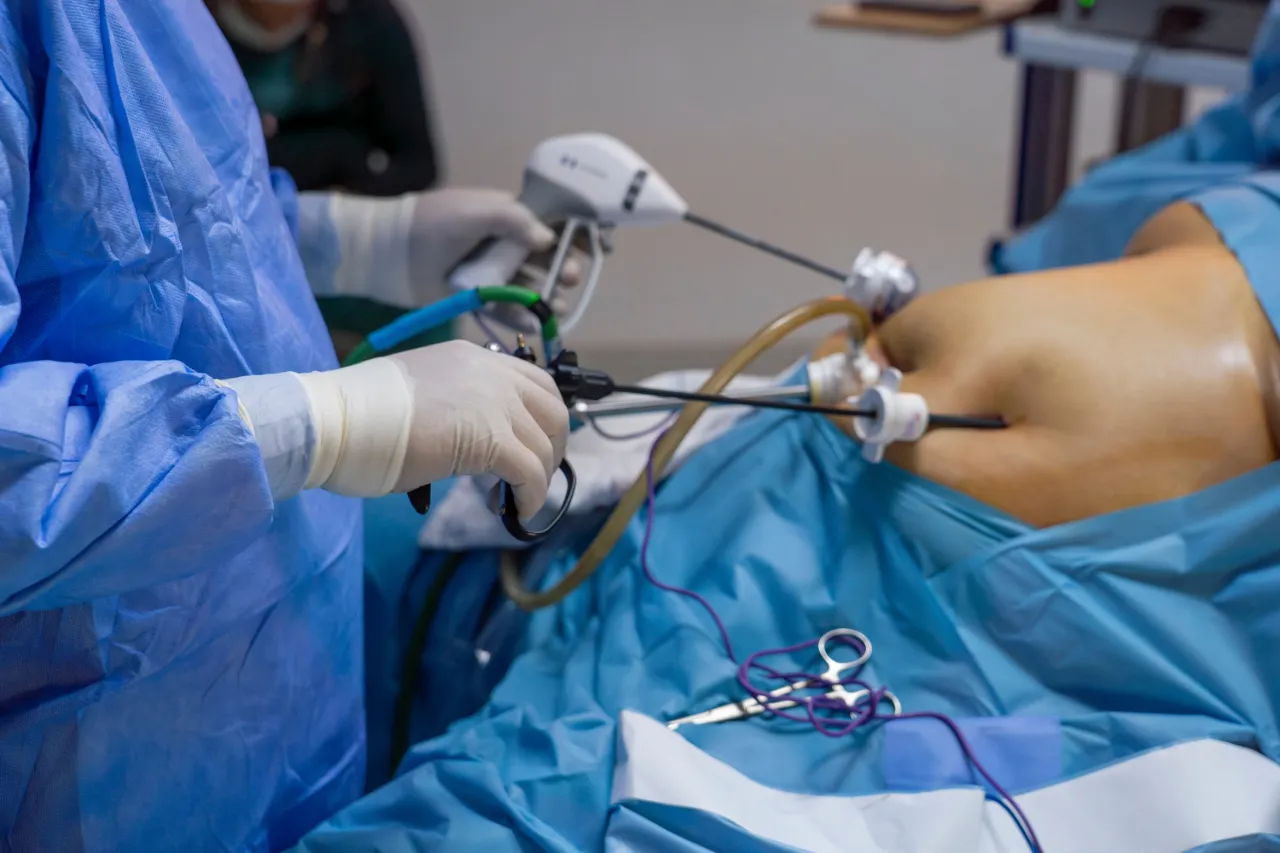
When Might a Laparoscopic Approach Be Less Suitable?
Some hernias may require different or more extensive access to the affected area. In these situations, another surgical approach may be more appropriate for the repair required.
When More Extensive Abdominal Wall Reconstruction Is Needed
Some complex hernias require more than closing the defect itself. If wider reconstruction of the abdominal wall is needed, the surgeon may consider an approach that provides appropriate access to restore and reinforce the affected area.
When an Irreducible Scrotal Hernia Is Present
Some groin hernias extend into the scrotum and cannot be pushed back into the abdomen. Although minimally invasive repair may still be possible in selected cases, the added complexity can make an open approach more appropriate.
When an Emergency Changes the Surgical Priorities
If a hernia becomes trapped or its blood supply is threatened, the priority shifts towards assessing the affected tissue and providing timely treatment. Possible bowel involvement and the patient’s overall condition may then have greater influence on the operative approach.
Laparoscopic surgery may still be appropriate in selected emergency cases, but the immediate findings and treatment priorities can change how the surgical approach is chosen.
Being less suited to laparoscopic repair does not mean that a hernia cannot be treated, as another surgical approach may still be considered.
Find Out Whether Laparoscopic Hernia Surgery Is Suitable for You
If you are weighing up different hernia treatment options, it can be difficult to know how much general information actually applies to your own situation. A consultation allows the hernia itself, your previous surgical history and relevant health factors to be considered when discussing whether a laparoscopic repair may be suitable.
At JS Wong Hernia Clinic, care includes the assessment and surgical management of hernias, with laparoscopic repair among the treatment approaches available. Dr Wong Jen San manages a range of hernia conditions using both open and laparoscopic techniques, with a particular clinical focus on minimally invasive hernia repair.
If you are considering hernia surgery, contact the clinic to discuss whether a laparoscopic or another surgical approach may be appropriate for your hernia.
FAQs About Laparoscopic Hernia Surgery
Our Dedicated Specialist
Dr Wong Jen San
Consultant Hepatobiliary & Pancreatic Surgeon
MBChB (UK), MMed (Singapore), Msc (Singapore), FRCS (Edinburgh), FAMS
Dr Wong Jen San is a consultant hernia surgeon with over 15 years of experience in diagnosing and treating a wide range of hernia conditions. He has a strong focus on minimally invasive (laparoscopic) surgery, helping patients achieve precise outcomes with less pain, minimal scarring, and faster recovery. Dr Wong received his medical degree from the University of Leicester and underwent extensive surgical training in both the United Kingdom and Singapore. He further advanced his expertise through clinical fellowships in Japan, gaining diverse international experience in hernia repair techniques. Committed to patient-centred care, Dr Wong combines evidence-based practices with a thoughtful and personalised approach to treatment.